In a previous piece, I made the case that connectivity, not more features, is what determines whether a tool stays relevant as AI reshapes how work gets done.
Marketing teams feel the pain of managing too many disconnected tools. Teams we talk to generally want to:
- Shrink their monthly SaaS bill or total tool count
- Increase usage of what they actually pay for
- Surface power-user knowledge so any team member can access it
- Cut down on repetitive tasks
Changes like these, promised by AI, take time to reach. But smart teams are taking meaningful steps now rather than staying on the web 2.0, new-feature hamster wheel.
Here's the order I think those steps have to happen in, and why the first one is the one most teams skip.
Governance First, Then Natural Language Power Usage, Then Net-New Generation
Picture a mid-size CPG company with four product lines under two brands. Each line has its own SKUs, seasonal variants, and retail partners. The brand team is small. The asset library is not.
Before anyone asks an AI system to build anything new, one question matters most: can the right person find the right asset, and does that asset carry the right permissions and context?
At a company like this, governance usually breaks down in two places.
The first is brand governance across lines. Line A's team doesn't always know what Line B approved last quarter. Guidelines drift. Logos get used in the wrong color variant because nobody flagged that it changed.
The second is the power-user problem. One or two people know where everything lives, which folder has the current specs, which version is approved. That knowledge never makes it into the system itself, so everyone else routes around it — ad-hoc requests, Slack messages, asking the same person to “make the presentation pretty.” The library ends up only as accessible as the person who understands it.
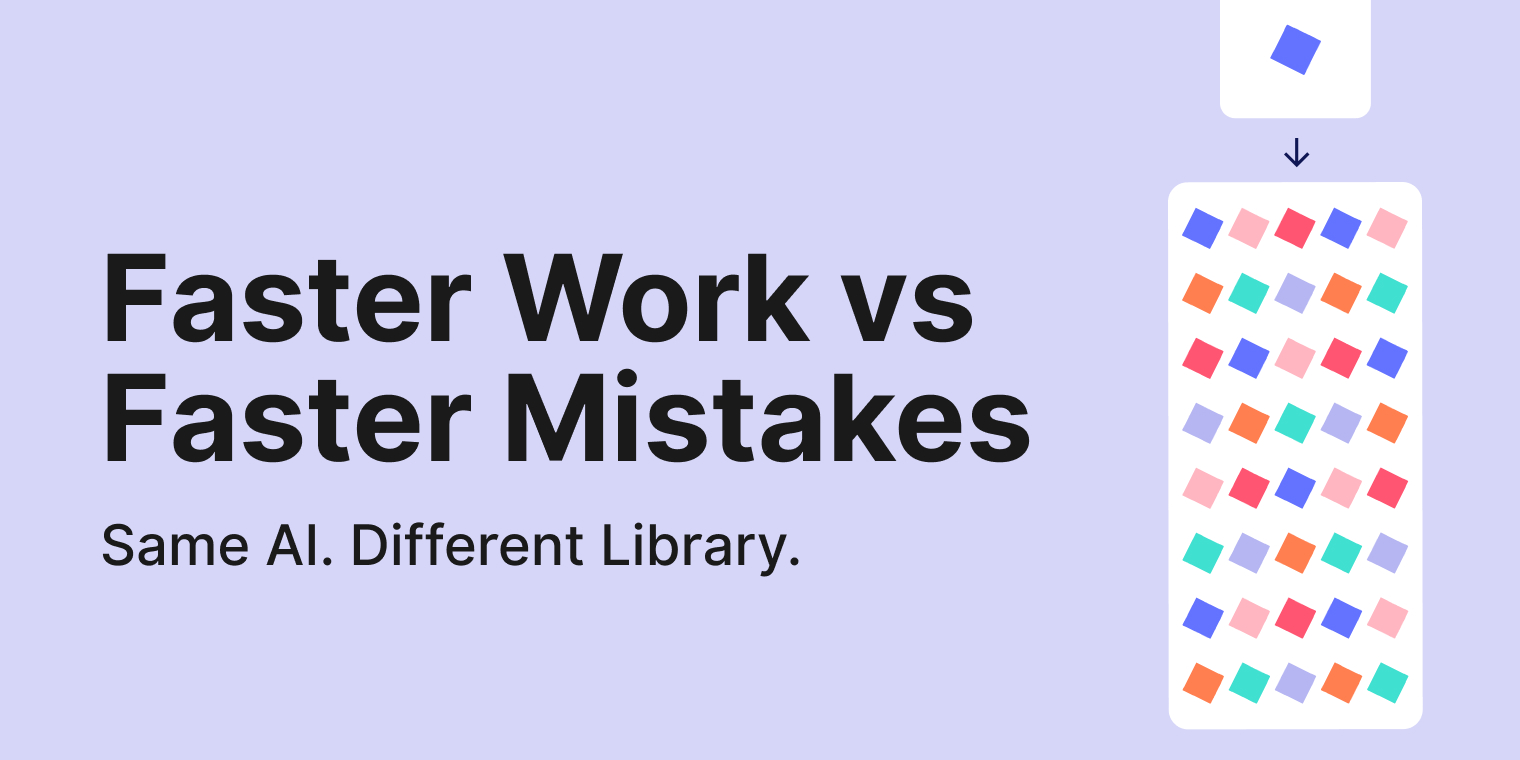
Connect an LLM to a disorganized DAM and you don't get faster work. You get faster mistakes.
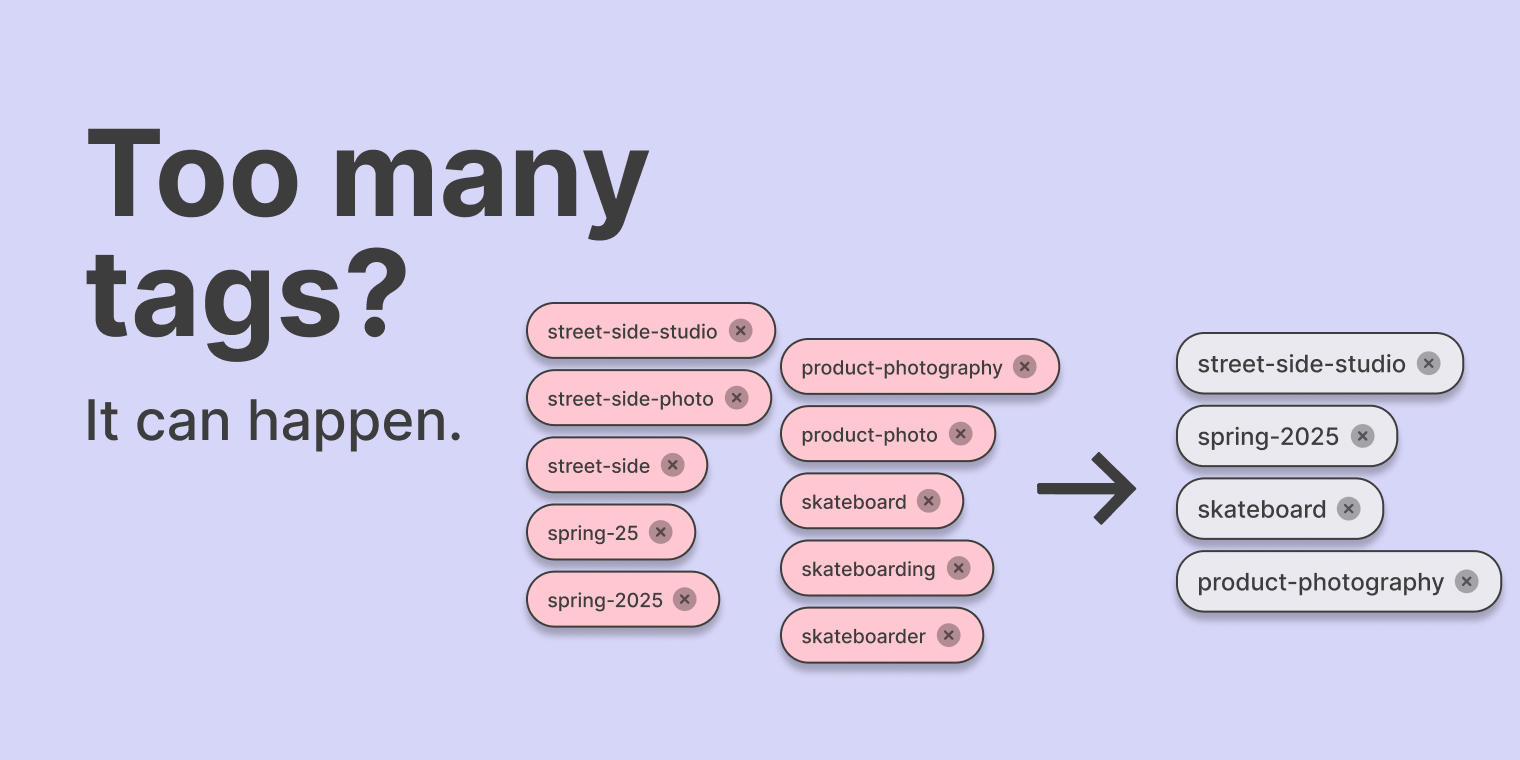
Which is why the first useful thing to ask an AI system for isn't creative work. It's an audit. Pointed at a DAM it can actually reach, the questions worth asking first are the boring ones: which assets are duplicates, which brand guidelines are outdated but still circulating, which SKUs are missing current product photography. Answer those before anyone tries to build anything net-new.
Governance stops being a manual chore and becomes something closer to a continuous audit. It changes your team's standard work, saving time while maintaining control, and it brings a key piece of your stack into the AI tools where you're already spending more of your day.
Once governance is in place, two things become possible.
AI as the Power Usage Layer
The next level is AI serving as an integrated part of daily operations.
Someone on the brand team needs an Instagram-sized crop of a hero shot, with copy shaped by the current product description, and they need it in five minutes, not a queue.
Connected the right way, that request would happen in natural language. “Resize this for Instagram, use the current tagline from the summer guidelines doc, keep it inside brand color rules.”
The system would pull the approved asset, apply the transformation, and check the result against the guideline document — because that document is connected too, not an isolated PDF sitting somewhere nobody rereads.
Downstream, the file would follow your naming convention, get tagged, and land back where it belongs. The next person who needs it finds it, and never generates a request at all.
The context making that possible isn't machine-generated. It's the knowledge your power users already carry — which asset is current, which guideline supersedes the last one, why that one logo variant never gets used, what the retail partner asked for last time. That knowledge is human and stays human. What changes is that it becomes something you can put into the system, maintain on purpose, and let the whole team draw on, instead of something that lives in two people's heads and leaves when they do.
That's AI absorbing the steady stream of small work that used to interrupt someone's day twenty times over. None of it is exotic. All of it depends on the governance layer underneath it.
AI as the Builder
The next stage, one that's currently oversold across a lot of martech, is AI systems that create net-new creative assets.
Take that same CPG company heading into a seasonal line refresh. 40 SKUs across two brands, each needing an updated sell sheet with new pricing, new photography, and updated claims and compliance language.
Built by hand, that's days of production work, multiplied by however many SKUs get updated mid-cycle. Connected properly, an AI system would take one approved template, pull current product data for each SKU, and generate 40 sell sheet variants that follow brand guidelines — because the guidelines are part of what it's reading, not a separate reference document a designer has to remember to check.
That's the shift from assistant to builder. Not helping with a task that already existed. Opening a new path to deliver high-impact work that wouldn't have gotten built otherwise.
That distinction is the whole thing. This isn't work getting replaced, it's scope getting wider. Nobody was going to hand-build variants for every SKU, every partner, every channel — so nothing gets taken away. A ceiling moves. And where it moves is up to whoever is operating. Efficiency, if throughput is the constraint. Quality, if consistency is what keeps slipping. Reach, if the limit is how many partners or markets you can keep current. The point isn't that AI picks one. It's that the ceiling stops being set by how many hours your team has.
Which changes what a content library is worth. For twenty years the case for organizing your assets was defensive — fewer mistakes, less rework, faster retrieval. That's a real case and it's also why asset management kept losing budget fights to tools with revenue attached to them. Connected properly, the same library stops being a filing cabinet you maintain and becomes the input to everything built downstream of it. Governance isn't overhead in that model. It's the thing determining how far your content can travel and how much can be made from it. With the right connections and real stewardship behind them, the ceiling on what a team can do with content it already owns moves somewhere I don't think any of us can see the top of yet.
The job the library has to do doesn't change. It has to be the system of record an AI tool can actually reach, with clean governance underneath it. No governance, no natural language power usage, no building.
The Interface Doesn't Matter as Much as the Access
People ask me what the “hub” for this should be. A desktop chat app, a terminal, an IDE, something built internally?
That's a preference, and how technical the interface is happens to be part of the preference. A brand manager and a developer will answer differently, and both answers are right for the person giving them. What isn't a preference is whether your systems are reachable at all. Whatever your team works in, the real question is the one underneath all of this: can it reliably reach and interpret your operating context, or does a person have to bridge the gap by hand with repeated corrections and reminders?
Get the governance right and make your systems reachable. The interface is a preference.
The connection is the requirement.
What I want to get into from here is the connection itself. Not the strategy around it — the actual mechanics of what makes a system reachable, and what we're learning as we build toward it.